
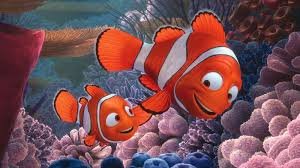
It shouldn’t still hit this hard. It’s a brightly coloured animated film about fish, jokes, and underwater chaos. And yet Finding Nemo has quietly turned into one of those rare movies that adults revisit and immediately regret underestimating again. Because within minutes, it stops feeling like a kids’ adventure and starts feeling uncomfortably personal.
What makes it even stranger is how familiar it already is. You know the story. You’ve seen the scenes. And still somehow it gets you anyway.
Released in 2003 by Pixar Animation Studios, Finding Nemo came out during Pixar’s most influential stretch, when the studio was redefining what animated storytelling could emotionally carry. Directed by Andrew Stanton and co-directed by Lee Unkrich, it follows Marlin, a clownfish living in the Great Barrier Reef, whose son Nemo is taken by a diver and placed in a fish tank in Sydney.

What sounds like a simple rescue mission slowly reveals itself to be something much heavier: a story about fear, control, and what it costs to love someone too much to let them go.
A huge part of why the film still resonates is its voice cast, which feels deceptively simple but lands with surprising emotional weight. Albert Brooks voices Marlin, and what makes his performance so memorable is how tightly wound it feels. He isn’t written as a classic hero he’s anxious, reactive, and constantly imagining worst-case scenarios. And the more you watch it as an adult, the more understandable he becomes.
Opposite him is Ellen DeGeneres as Dory, a character who could have easily been just comic relief but ends up becoming the emotional counterbalance of the entire film. Her forgetfulness isn’t just a joke it shapes how she experiences fear, connection, and trust. Where Marlin holds onto everything too tightly, Dory can’t hold onto anything at all, and somehow that balance makes both characters feel more human.
Even Nemo, voiced by Alexander Gould, carries a quiet emotional weight. He isn’t just a child in danger he’s someone trying to figure out how much independence is possible in a world that feels constantly unsafe.

What really makes Finding Nemo linger, especially for adults, is how it uses fear as its emotional language. The ocean isn’t just a setting, it’s a system that refuses to be controlled. Every encounter strips away certainty. Sharks that don’t behave the way you expect. Currents that erase direction entirely. Jellyfish fields that turn humour into panic in seconds.
Marlin doesn’t fail because he’s weak. He struggles because the world keeps proving him right. And that’s where the emotional tension builds, not in big dramatic twists, but in constant small reminders that safety is never guaranteed.
And then there’s the real reason people ask, “Why does this movie still make adults cry?” It’s not nostalgia. It’s recognition.
Marlin begins the film already carrying loss. Nemo’s mother is gone before the story even properly begins, and what remains is a father shaped entirely by fear of repeating that pain. So every decision he makes comes from a place of protection, but also limitation. He doesn’t just want to find Nemo. He wants to prevent the world from taking anything else away from him.
That’s what changes on rewatch. As a child, you see a rescue story. As an adult, you see someone slowly learning that love cannot function without trust.
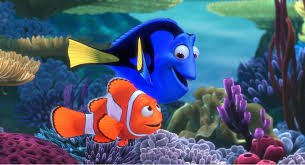
Dory, meanwhile, becomes something people appreciate more with age. At first, she’s just funny. But over time, her presence feels more like emotional grounding. She doesn’t spiral into fear because she can’t hold onto it. She resets, moves forward, and keeps going even when nothing makes sense. In a story built around anxiety, she becomes the unexpected antidote.
And that contrast is what makes the emotional core of the film so effective. Marlin remembers everything he’s afraid of. Dory forgets everything she’s afraid of. And somewhere between those extremes, the story finds its emotional centre.
So why does Finding Nemo still make adults cry?
Because it doesn’t feel like a lesson you learn once. It feels like something you keep relearning in different ways throughout life. Letting go isn’t a single decision, it’s a repeated act of trust in a world that doesn’t promise safety.
And that’s why it still lands. Not because it’s loud or dramatic, but because it understands something very simple and very uncomfortable: love doesn’t get easier when you’re older. It just gets more complicated.
⭐ Final Rating: 9/10