
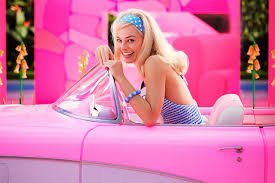
Scrolling through TikTok lately, it’s nearly impossible to avoid the pink wave sweeping the internet. Every friend, coworker, and stranger seems to have a Barbie-themed joke, meme, or viral moment ready to share. Greta Gerwig’s Barbie isn’t just a movie it’s a social event, a cultural touchstone, and, in many ways, a mirror held up to our own obsessions with identity, nostalgia, and self-invention. From the opening frame, the film signals that it’s aware of its own mythos and playful power, blending high-concept satire with the kind of candy-coloured spectacle that can dominate a summer weekend conversation.
At its core, Barbie represents a bold risk that largely pays off. After years of studio tentpoles leaning heavily on franchise familiarity, Gerwig’s entry into the Barbie universe is a self-aware, visually audacious statement. The film is not a mere nostalgia-laden cash grab; it interrogates the mythology of a brand while delivering genuine entertainment. In this sense, it parallels other subversive pop-culture experiments like Paddington 2, which used an ostensibly child-oriented franchise to explore broader emotional and social truths, or The LEGO Movie, which managed to combine corporate mascotry with layered humour and commentary on creativity.

Positioned within Gerwig’s body of work, Barbie is a natural evolution from her previous explorations of identity and performance in Lady Bird and Little Women. Both films examine the tension between expectation and desire, but Barbie does so on a far more fantastical canvas. The film is also emblematic of Warner Bros.’ current approach: studio ambition balanced with risk-taking aesthetics. In contrast to Disney’s comparatively safe animated features like Encanto, Gerwig’s Barbie dares to be loud, ironic, and self-conscious without slipping into cynicism.
Performance and Character Analysis
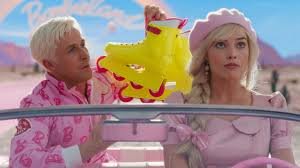
Margot Robbie’s Barbie is magnetic not merely for her charm but for the subtle layers she brings to the role. Robbie balances a bright, energetic surface with nuanced restraint, often letting small gestures, a flick of the wrist, a hesitant pause, suggest deeper self-reflection beneath the gloss. Ryan Gosling as Ken provides an equally intriguing counterpoint; his comedic timing and physical expressiveness lean into caricature without ever feeling two-dimensional. Their chemistry is built on contrasts: Barbie’s poised self-awareness against Ken’s exaggerated earnestness. Supporting performances, including America Ferrera’s grounded yet witty presence, provide emotional ballast, reminding the audience that even in a candy-coloured utopia, stakes matter.
Craft and Technical Merit
Visually, Barbie is a feast. Cinematographer Rodrigo Prieto’s work emphasises pastel saturation and compositional symmetry, evoking the plastic perfection of the titular character’s world while allowing subtle subversions, a slightly askew frame here, an incongruously dramatic shadow there to puncture the artifice with humour and insight. The editing rhythm, handled deftly by Nick Houy, moves between rapid, meme-ready bursts of humour and slower, contemplative sequences, creating a pacing that mirrors social media’s own attention economy. Production design and costume work are nothing short of spectacular, merging commercial iconography with imaginative flourishes that hint at real-world human concerns. The score, a playful mix of orchestral whimsy and pop motifs, underscores the narrative’s tonal dexterity, shifting seamlessly from satire to sincere emotional beats.
Themes and Subtext
Beneath its candy-coloured exterior, Barbie interrogates the pressures of perfection, gender roles, and self-definition. It asks viewers to consider how identity is constructed, performed, and marketed, offering sly critiques of both consumer culture and societal expectations. Unlike more superficial franchise films, it doesn’t merely present Barbie as aspirational; it interrogates what aspiration means in a world obsessed with image and virality. This duality, playful spectacle paired with sharp cultural observation, is the film’s enduring strength.
Tone and Audience Experience
Watching Barbie feels like attending a meticulously choreographed party where every joke lands, every visual delight is purposeful, and the emotional stakes are unexpectedly resonant. The film risks tipping into absurdity or indulgence, especially during its more surreal sequences, but it succeeds through careful tonal calibration. Audiences will find themselves laughing, reflecting, and perhaps even moved, often within the same scene. Pacing never feels sluggish, and tonal shifts from satire to heartfelt sincerity are managed with surgical precision.
Critical Judgment
Barbie is a rare instance of commercial and artistic ambition coexisting in perfect harmony. Where other toy-based properties falter under their own nostalgia or corporate conservatism, this film uses those very constraints to innovate. It is, without hyperbole, a return to form for Gerwig and a standout in summer cinema. Any minor quibbles, occasional over-the-top meta humour, or fleeting tonal dissonance are negligible against the film’s overall confidence, inventiveness, and cultural resonance.
Conclusion
By the final credits, Barbie leaves the audience with the sense that it is more than a movie: it’s a conversation starter, a viral touchpoint, and a cultural mirror. Greta Gerwig has transformed a plastic icon into a lens for reflection, humour, and delight. In a media landscape dominated by safe bets and formulaic adaptations, this is audacious, clever, and profoundly enjoyable.
Rating: ★★★★☆
Should you watch it? Absolutely, grab friends, make memes, and revel in a movie that’s as smart as it is pink.
Cast & Social Info:
 Barbie interrogates the pressures of perfection while keeping its humour irresistible. A candy-colored spectacle that’s as reflective as it is meme-worthy.”