

To call Aftersun a coming-of-age drama would be technically accurate and emotionally misleading. Charlotte Wells’ debut feature operates in a quieter, more elusive register less concerned with growth than with memory itself: how it distorts, withholds, and returns long after the moment has passed. This is not a film about what happened on a Turkish holiday in the late 1990s; it’s about what lingers when understanding arrives too late. In that sense, Aftersun feels less like a narrative and more like an act of excavation.
Wells’ arrival is striking not because of formal audacity, but because of restraint. In a cinematic landscape where intimacy is often overstated or telegraphed, Aftersun trusts absence. It shares DNA with films like Call Me by Your Name and The Florida Project works that filter emotional complexity through youthful perspective yet it diverges in its refusal to resolve or even fully articulate its central tension. Where those films allow for a degree of catharsis, Aftersun withholds it, opting instead for something more unsettling: recognition without closure.
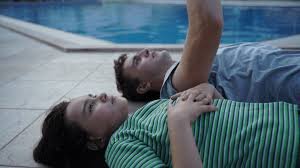
At its center are two performances that feel less like acting than lived experience. Paul Mescal’s Calum is a study in contradiction affectionate yet distant, playful yet shadowed by something he cannot name. Mescal’s technique is rooted in subtraction. He avoids overt signalling, allowing meaning to accumulate in the spaces between words. Watch the way he carries himself: the slight slump in his posture, the careful modulation of his voice when speaking to his daughter, the fleeting hesitations that suggest thoughts left unfinished. There’s a physical fragility to him, as if he’s constantly negotiating with his own body.
Opposite him, Frankie Corio delivers a performance of astonishing naturalism. As Sophie, she captures the porous boundary between childhood and adolescence, that liminal space where curiosity and confusion coexist. Corio’s timing is instinctive; her reactions often arrive a beat earlier or later than expected, lending an authenticity that resists polish. She isn’t performing innocence so much as inhabiting it, complete with its blind spots.
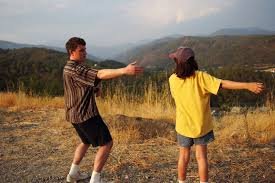
What makes their dynamic so affecting is not what is said, but what passes between them unspoken. Wells constructs their relationship through fragments, shared jokes, minor disagreements, and moments of quiet observation. There is no single defining scene, no dramatic rupture. Instead, the film accumulates meaning gradually, almost imperceptibly, until it becomes overwhelming in retrospect.
Formally, Aftersun is deceptively simple. The cinematography, by Gregory Oke, favours a naturalistic palette sun-bleached tones, soft shadows, and a tactile sense of heat that seeps into every frame. The camera often lingers just a moment longer than expected, allowing gestures and glances to resonate. There’s an intimacy to the framing that feels almost intrusive at times, as if the viewer is not merely observing but remembering alongside the film.
The editing, however, introduces a more disruptive element. Wells intercuts the holiday footage with flashes of something harder to place strobing images, glimpses of an older Sophie, fragments that feel more like memory than reality. These sequences resist easy interpretation. They function less as narrative devices and more as emotional punctuation, rupturing the film’s surface calm to reveal what lies beneath.
Sound design plays a crucial role in this interplay between presence and absence. Diegetic sounds, the hum of a hotel fan, distant music from a resort bar, and the rhythmic crash of waves ground the film in sensory detail. But it is in the use of music that Wells finds her most striking effect. The deployment of Under Pressure, in particular, transforms what could have been a conventional emotional climax into something far more ambiguous and devastating. It’s not just a release; it’s a collision between past and present, joy and grief.
Beneath its quiet surface, Aftersun is grappling with the unknowability of others, even those closest to us. It suggests that love does not guarantee understanding, and that memory, rather than clarifying, often complicates. The adult Sophie, though largely unseen, becomes a kind of ghostly presence, recontextualising the events we witness. What once seemed incidental takes on new weight; what felt complete reveals itself as partial.
There is also a subtle but persistent undercurrent of economic and generational tension. Calum’s attempts to create moments of happiness within limited means are tinged with a quiet desperation. The film never foregrounds this struggle, but it is there, embedded in the details: the modest accommodations, the careful budgeting, the unspoken compromises. It adds another layer to Calum’s character, suggesting pressures that extend beyond the personal.
Watching Aftersun can feel disarmingly uneventful in the moment. Its pacing is languid, its conflicts understated. It risks, and occasionally courts, the perception of slightness. But this is a deliberate strategy. The film’s true impact is deferred, surfacing not during the viewing experience but afterwards, as scenes replay in the mind with altered significance.
If there is a criticism to be made, it lies in this very subtlety. For some, the film’s refusal to clarify may feel frustrating, even withholding. It demands an active viewer, one willing to sit with ambiguity and resist the urge for resolution. Yet to impose clarity would be to betray the film’s central premise: that some experiences can only be understood incompletely, if at all.
“Memory doesn’t preserve the truth it reshapes it, softens it, hides what we couldn’t bear to see.”
“In its quietest moments, Aftersun becomes almost unbearable not because of what it shows, but because of what it refuses to.”
In the end, Wells has crafted something rare: a film that trusts its audience enough to leave space for interpretation, and that understands the emotional power of what is left unsaid. Aftersun does not announce itself as devastating. It becomes so gradually, almost imperceptibly, until the weight of it is impossible to ignore.
Rating: ★★★★★
Should you watch it? Yes, but expect it to linger long after the screen goes dark, revealing more of itself with time.